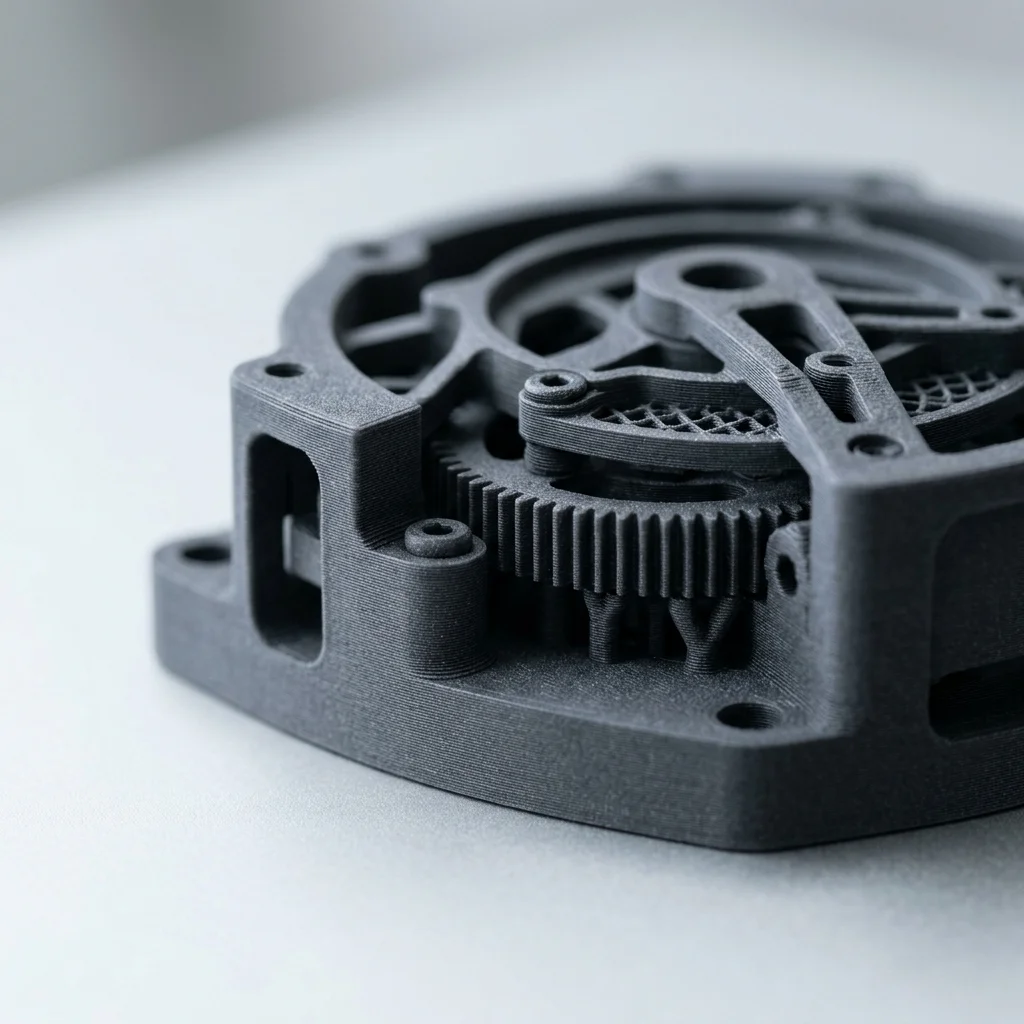
Core Technologies
We'll choose the optimal printing method for your specific design.
FDM Printing
Fast and durable parts made from high-strength engineering plastics. Ideal for functional prototypes and industrial components.
SLA Printing
Maximum detail and smooth surface for professional prototypes and high-precision models.
Available Materials
PLA Plastic
PLA products are valued for their clean appearance, smooth surface, and ability to capture fine details. Items made from PLA often look neat and aesthetically pleasing, which makes them well suited for decorative objects, display models, toys, and concept prototypes. The material is also relatively lightweight and can be used comfortably in indoor environments, including educational or hobby settings. At the same time, PLA products have limitations in everyday use. They are relatively brittle and can crack or break under impact or stress, making them unsuitable for functional or load-bearing applications. They are also sensitive to heat and can deform if left in warm environments, such as inside a car on a sunny day. Because of this, PLA are best used for indoor, low-stress purposes rather than for demanding or long-term outdoor use.
PETG Plastic
PETG products offer a strong balance between durability and appearance. They are more impact-resistant and less brittle than PLA, while still maintaining a relatively clean and slightly glossy finish. Items made from PETG are well suited for functional parts, containers, protective elements, and everyday objects that need to handle moderate stress. They also perform well in slightly demanding environments, including those with occasional moisture or temperature variation. On the downside, PETG products can be more prone to surface scratches and may not look as crisp in fine details compared to PLA. They also tend to be somewhat flexible, which is not always desirable for parts that require rigidity. While more durable than PLA, they are still not ideal for high-temperature or heavily loaded applications, so their use sits between decorative and fully industrial needs.
TPU
TPU products are valued for their flexibility, durability, and resistance to wear. They can bend, stretch, and absorb impacts without breaking, making them ideal for protective cases, gaskets, seals, flexible connectors, and parts that need to withstand repeated movement. They also provide a soft-touch feel and good grip, which is useful for ergonomic or handheld items. On the downside, TPU products are not rigid and may deform under constant load, which limits their use in structural applications. Their flexible nature also means they can feel less precise or stable in parts that require exact shape retention. In addition, their surface can attract dust and may show signs of wear over time in high-friction use.